

Earlier last month I went to see Dyani White Hawk’s, a Minnesota-based Lakota artist, Love Language at the Walker Art Center in Minneapolis. I knew very little of her and was simply drawn to her bright patterns and precise geometry; after moving to Minnesota, my eyes had been craving some warm color amongst the piles of frozen snow. Going in I wasn’t sure what to expect, but I left with a softer heart, feeling how her connection as a Lakota artist was deeply ingrained and woven into this shared midwestern place.
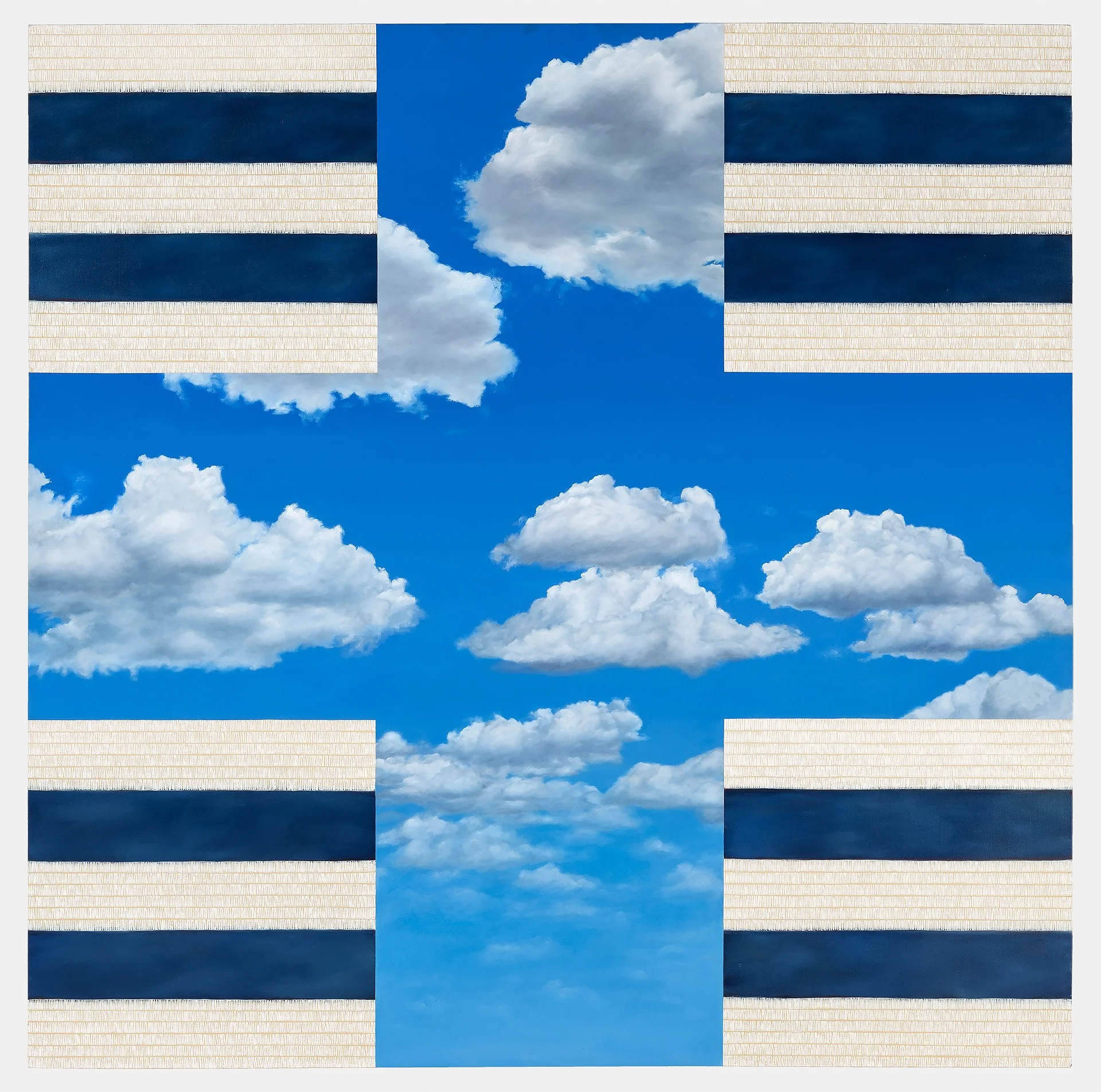
‘Seeing’ (2011), Walker Art Center
The first piece that caught my eye was ‘Seeing:’ a photorealistic sky caught between the outlines of sharp geometric lines, depicting a symbol created in intricate beadwork and “central to Lakota worldview and perspectives,” (The Walker, 2025). The sky was one I knew well, the kind I used to lie beneath for hours, dreaming about everything beyond. Dyani saw this sky on a drive back to the Twin Cities from South Dakota. She explains that the shape that borders the sky, is “about the way that we see the world according to our belief systems, and our various forms of education, and our teaching and our experiences within the world. How I see and experience the South Dakota sky is unique to my lived experiences, and that’s the same for every human being.” While the beadwork and design were beautiful, as was the intent, looking at this familiar sky in that moment, I could not help but feel constrained by the geometry through which I was forced to see. The sharp contrast between organic and geometric realities spoke volumes to me: is this freedom, or is it, also in a way, captivity? It felt ironic that while I looked at this piece, I felt how my own teachings and experiences within the world now only confirmed my confinement as I stared at this perfect midwestern sky.
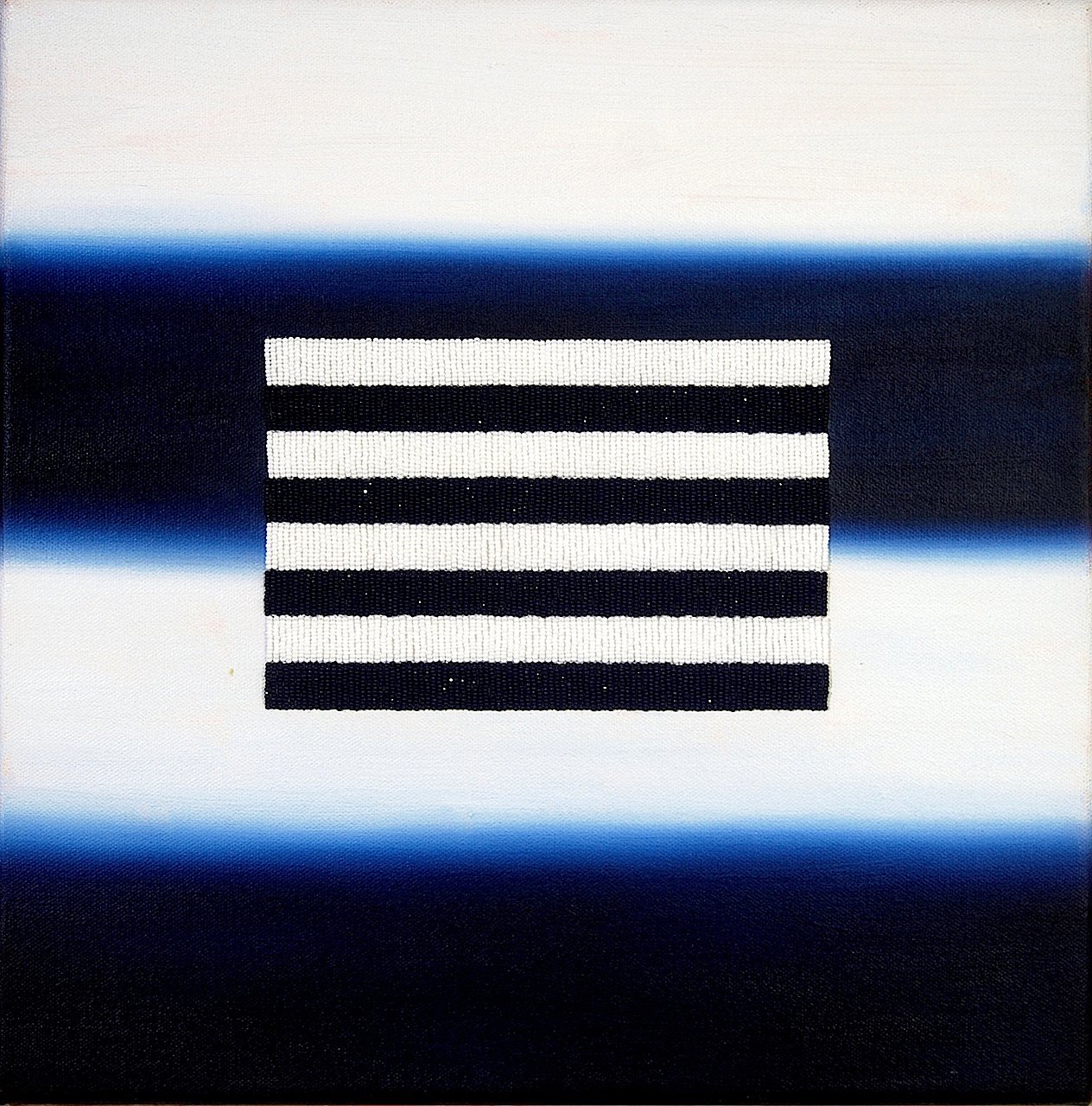
‘Untitled blue and white stripes (The History of Abstraction)’ (2013), Walker Art Center
I felt Dyani’s own search for freedom within her work. The overlay of 3 dimensional beads across the flat canvas in her ‘Untitled blue and white stripes (The History of Abstraction)’ felt like an obvious reclamation. Dyani spoke about the influences of Mark Rothko and Sean Scully in the world of abstract art and how their transitions of color parallel to that of Lakota beadwork: “Abstraction is a global language practiced across cultures, and it’s not owned or invented by a singular culture. It’s a human practice.” Yet in the world of Western art, we hear very little about or seldom give credit to that of indigenous practices as influences of abstraction.
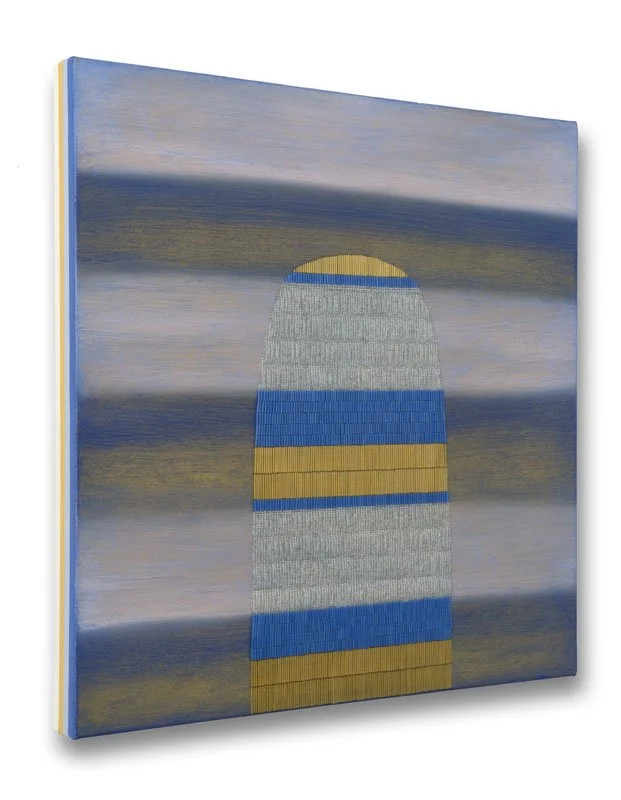
‘Untitled (blue and gold)’ (2016), Walker Art Center
Her ‘Untitled (blue and gold)’ addresses just this: with a similar style of beadwork overlain on canvas, Dyani outlines a figure, which I presume to symbolize moccasins, across a classically styled abstract painting. She says, “These figures are present, and they’re also slightly ghosted. It’s speaking to this kind of forced invisibility of our communities—they’re there, and they’re present, and they’re real, but they’ve also been purposefully shoved aside, or purposely ignored, or purposely attacked. In the way that we tell our art histories, they’re rarely addressed.”
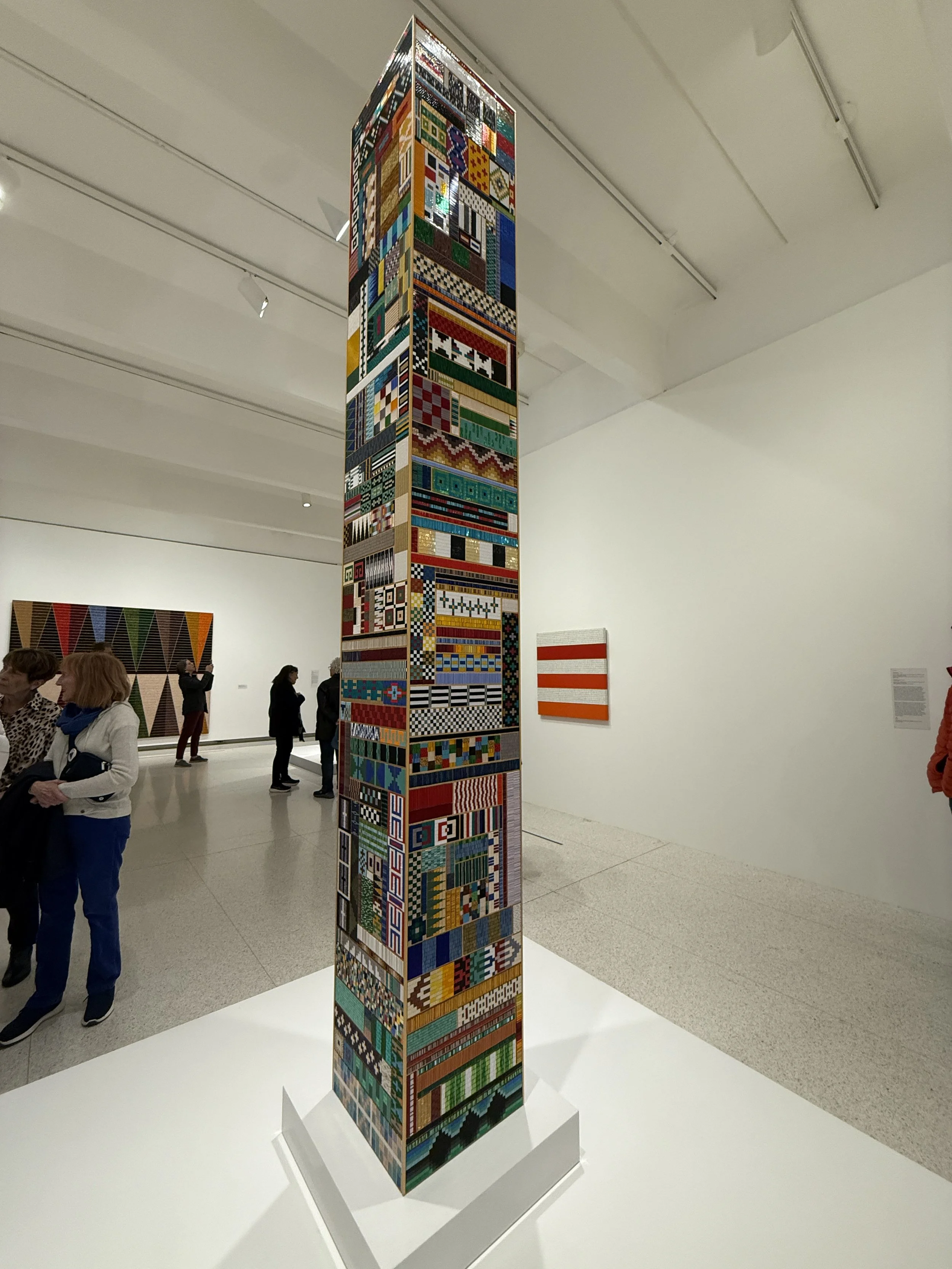
‘Visiting’ (2024, Walkr Art Center
I resonated with these feelings of invisibility here. While I previously fell mute to the homogeneity of stories the Midwest told of itself, Dyani used it as leverage to tell something different. By keeping her art history alive, she is preserving traditions and practices not only crucial to her lineage but ones that are essential to our humanness. For her larger beaded works, she brought in her family to help with the threading. With initial apprehension, she let go of the idea that her hand had to touch every step of the process and embraced the act of communal work, which in turn, beautifully and perfectly reflected values essential to Lakota tradition.
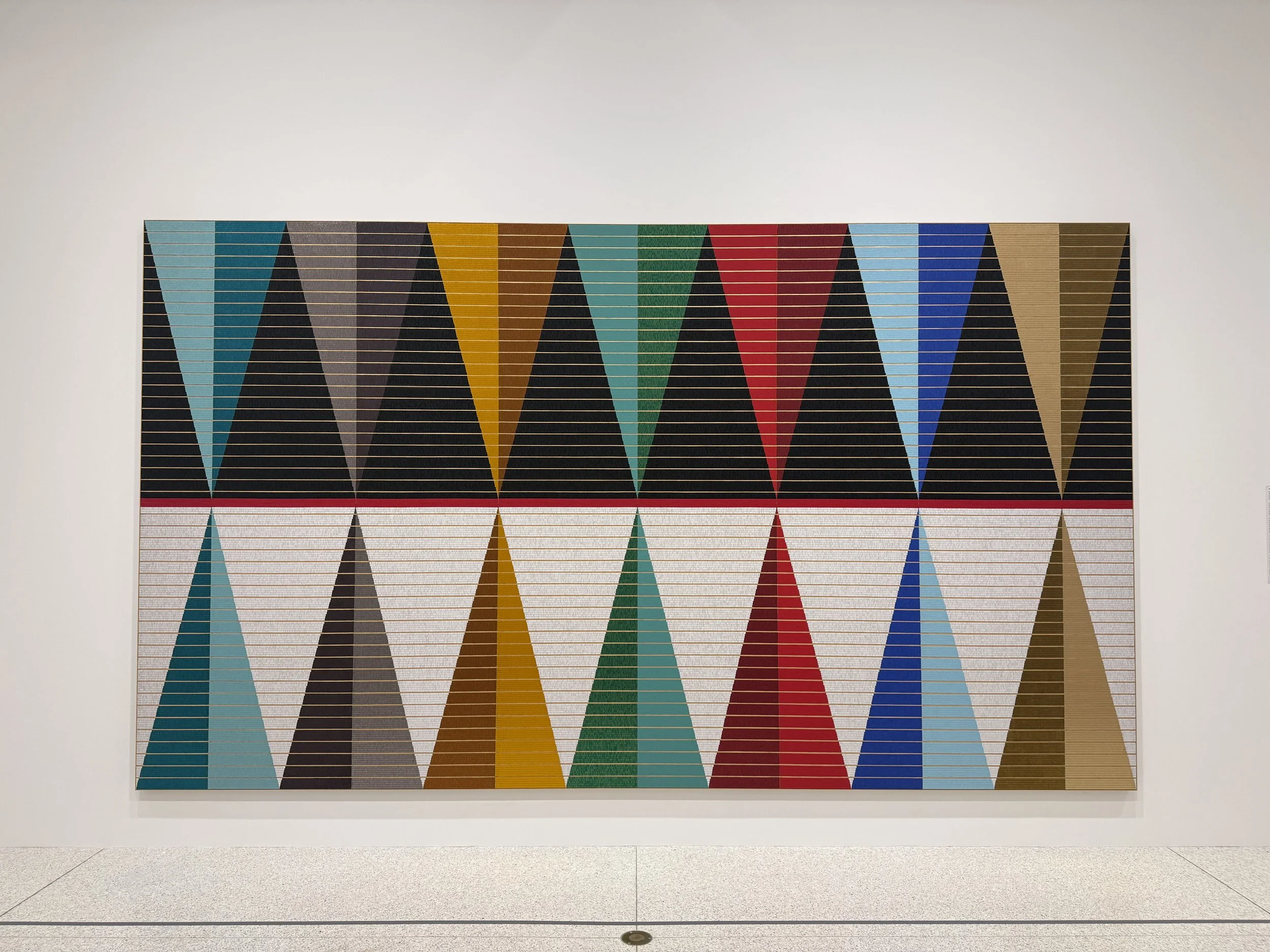
‘Wopila|Lineage’ (2022), Walker Art Center
But beyond the traditions within her own culture, the nature of her practice also feels radical for society at large. The beads look like tiny pixels and her large mathematically planned designs could be easily defined by points and vectors. But her process is an act of defiance decolonization: not lost to automation, efficiency, algorithms, or immediate pleasure, she allows us to revel in the magnificence of the human hand and mind working in tandem to define the greatest gift of art. To preserve ourselves and our experiences within the physical world now requires active resistance. Standing in front of her 8x14 foot panels of thousands of individually placed beads, I felt a resurgence and demand to keep creating, not simply for creativity’s sake but to honor and preserve the only craft that can truly reflect our humanity.
The following week, driving back to the Twin Cities from a work conference in Duluth, I looked out the car window as the vast sky turned from gray to pink. On that drive I reminded myself of the reasons for my moving back here and reflected on the reasons I left. While many and all still hold true, thinking about Dyani’s perfect blue sky and white clouds enclosed by the shapes through which she sees the world, I felt affirmed that I have returned with a stronger, more confident sense of self, and a boldness that will allow me to speak at higher volumes within the spaces I used to call home. I can only hope for myself now that I find the right compilation of shapes and patterns to border this midwestern sky so that I’m met with a little more freedom as I look above.
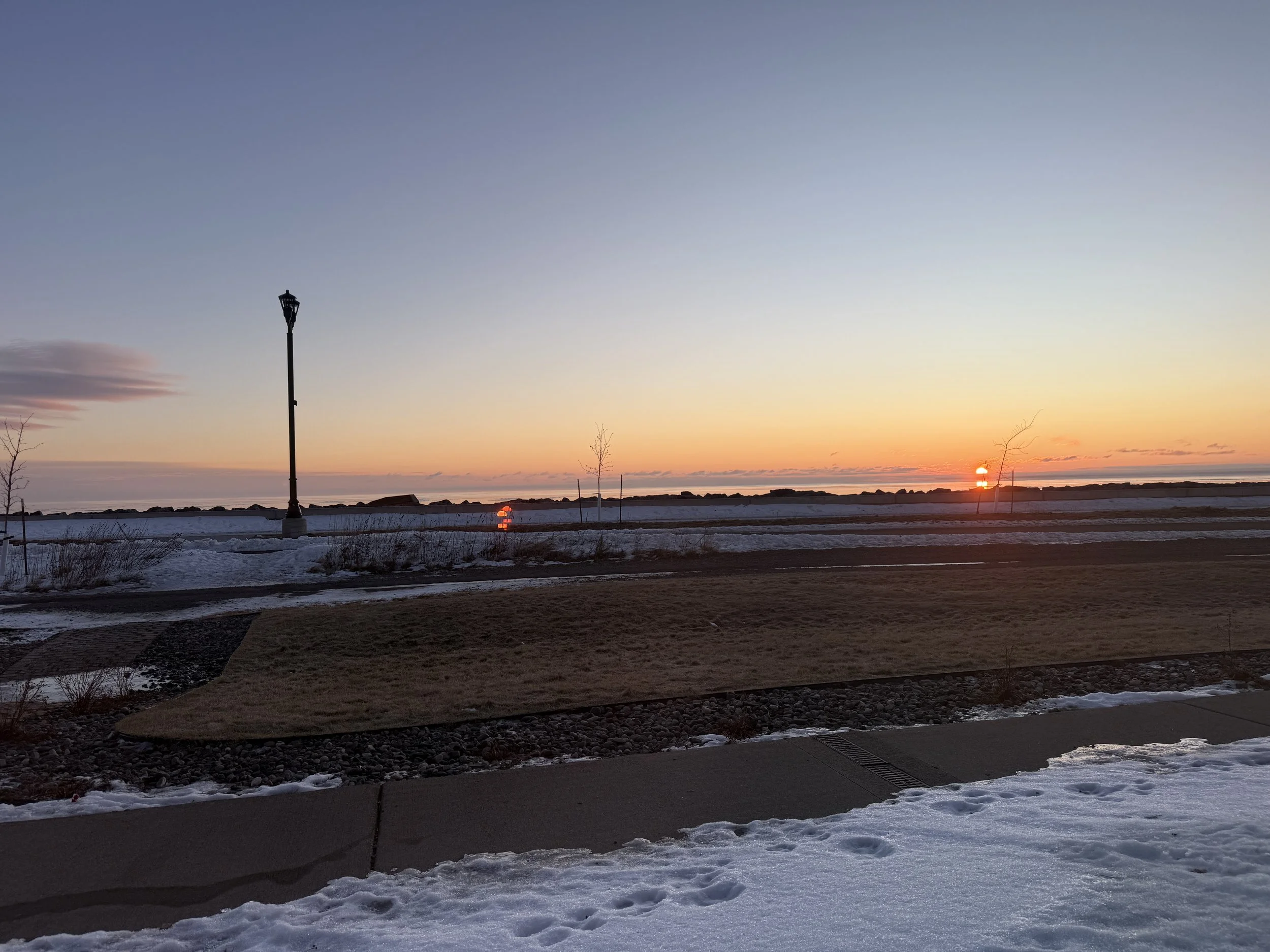
Duluth, MN
From the Notebook
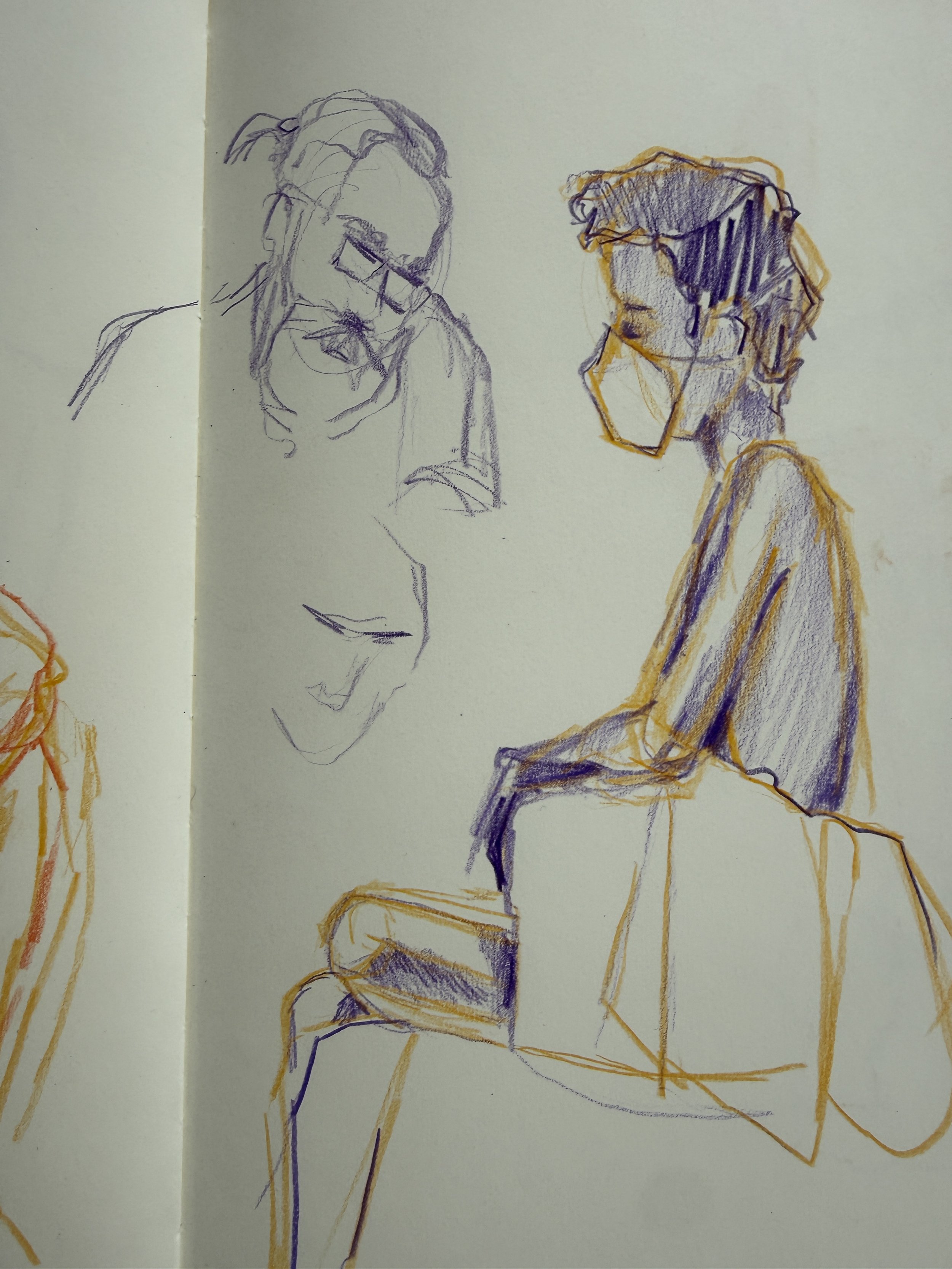
I found weekly open life drawing sessions hosted at the Minneapolis College of Art and Design and am reveling in the $6 fee for two hours. Some weeks are better than others, but I mostly feel grateful to be drawing again.
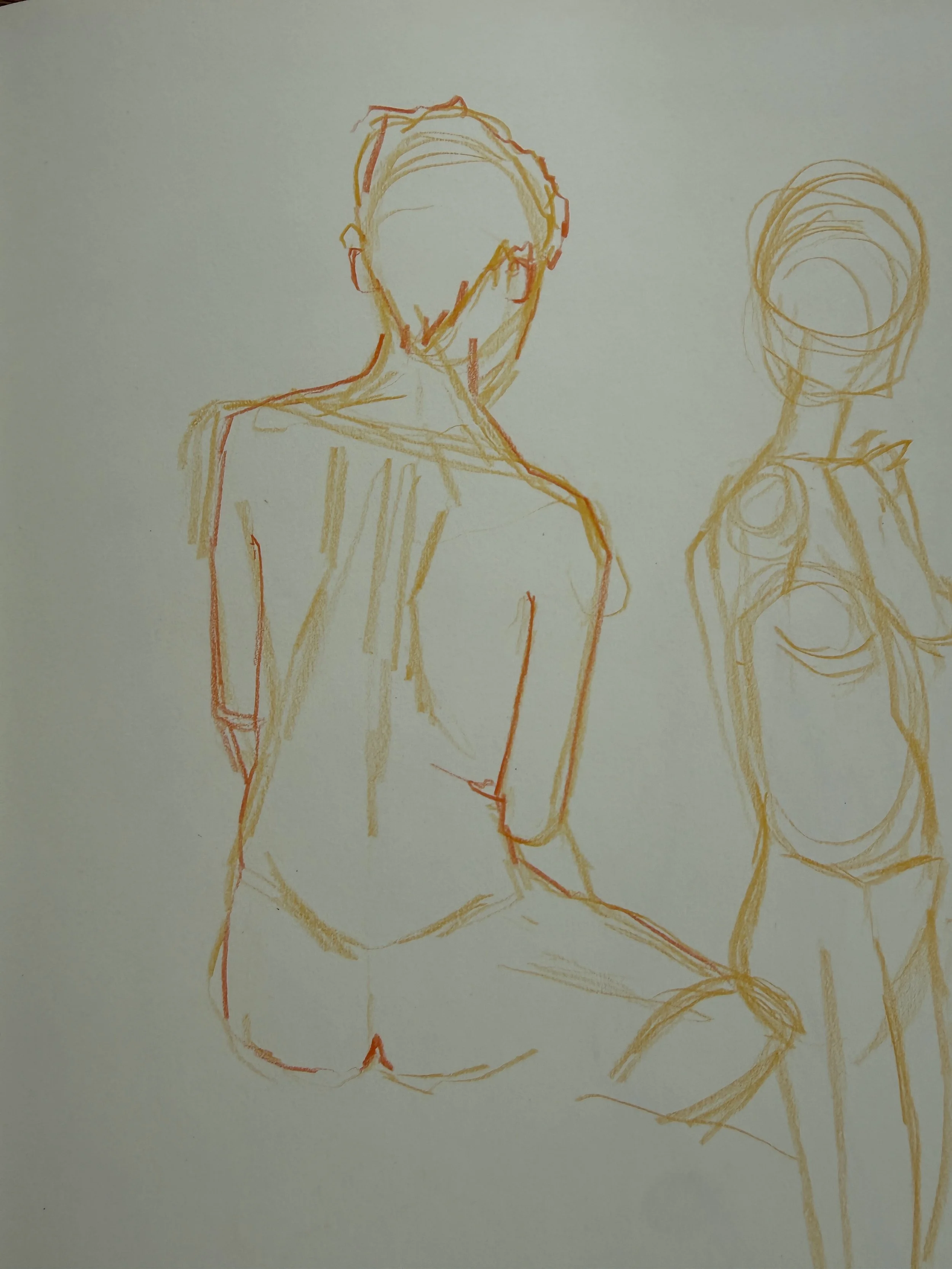
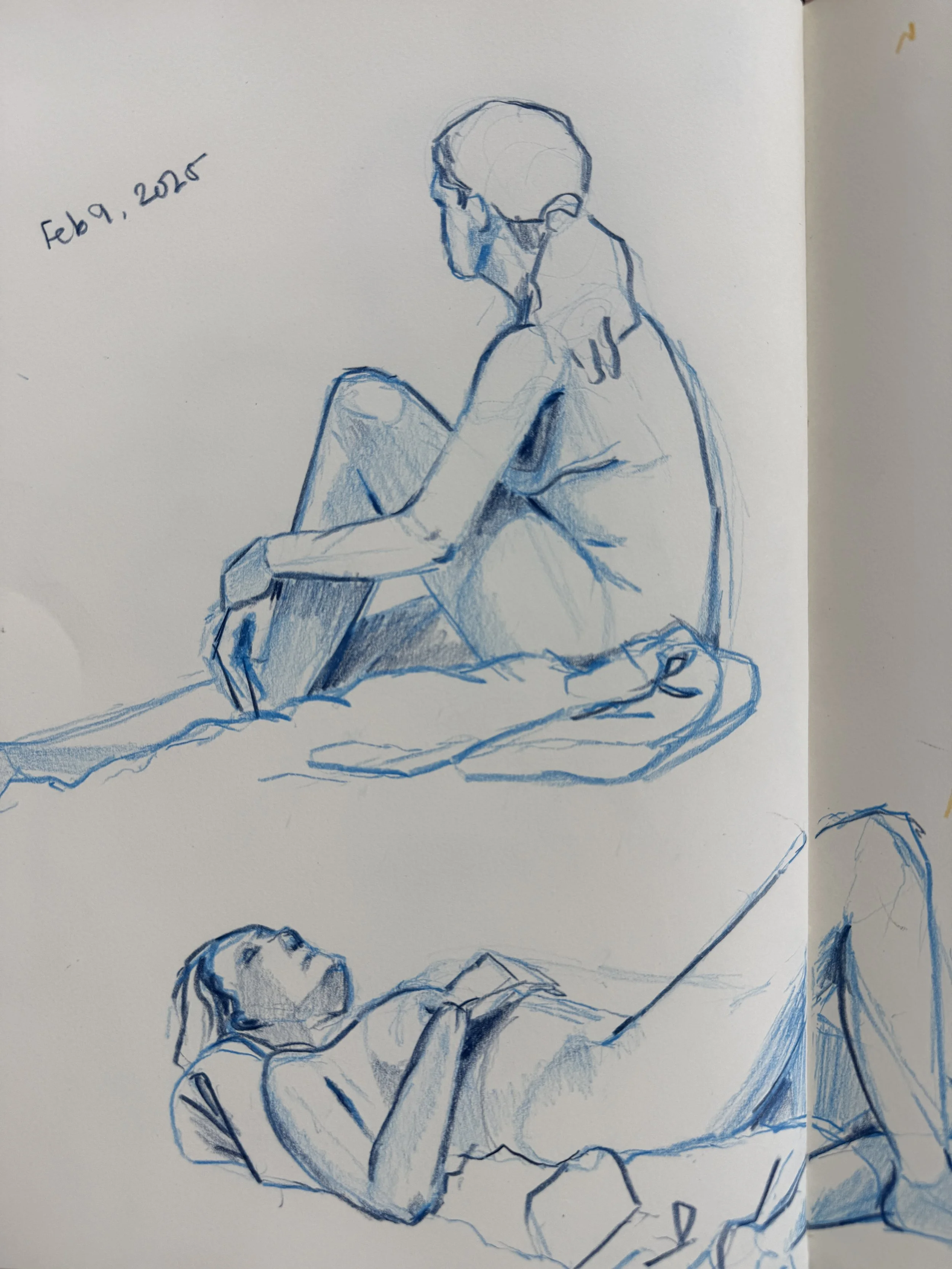
WIP
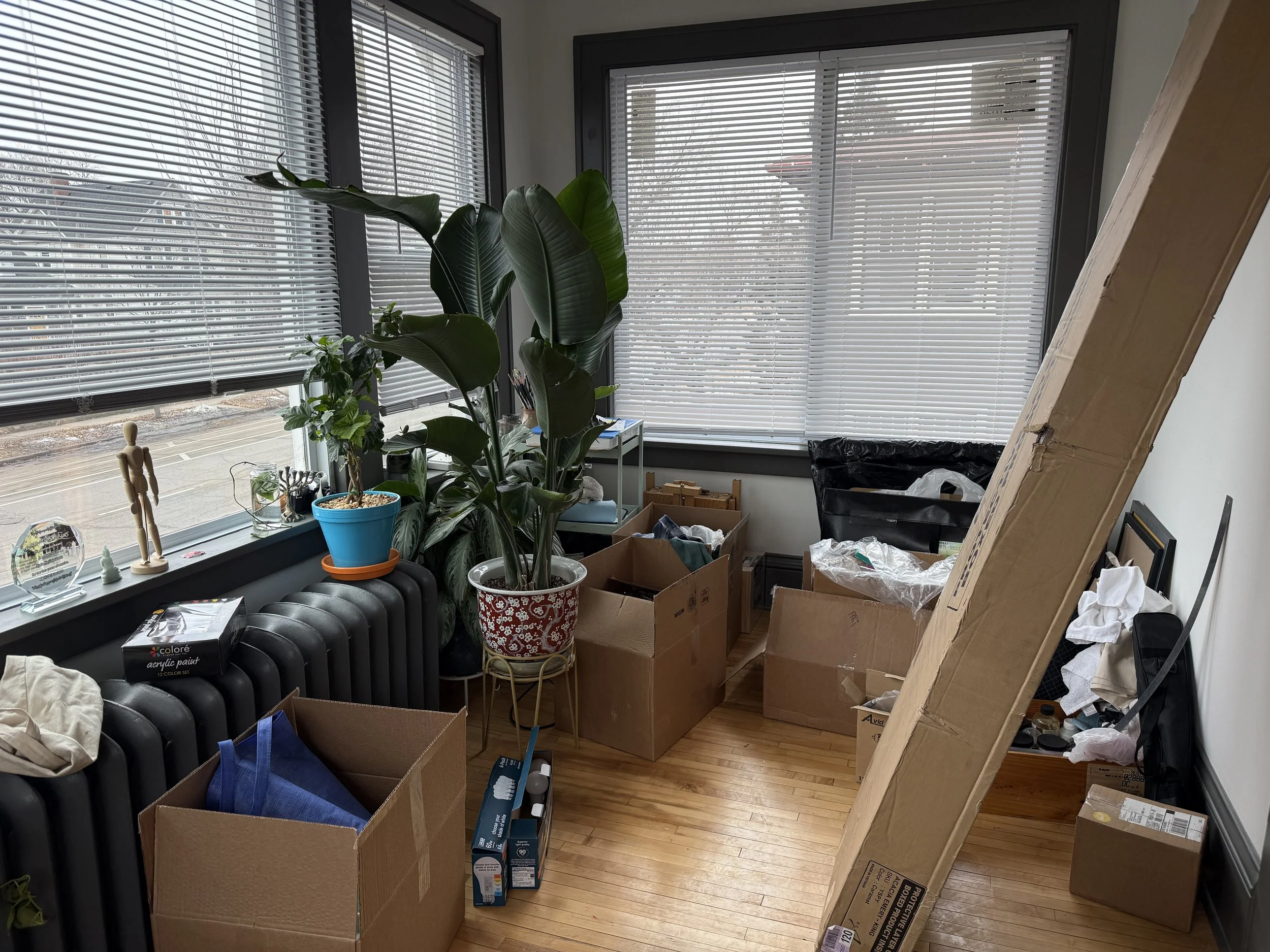
We moved to Minneapolis and it’s been a bit chaotic. This picture also serves as a reflection of my mental state the past week. Things are coming together, however, and I’m most excited to have my own studio space with three walls of sunlight.
Media Musings
Can Artists Help Shape American Cities Again? San Francisco recognizes the contributions artists make to forming culture and defining a city’s character. Facing gentrification, SF has put forth housing programs to help artists remain within the heart of the city. Through regulated and permanent artists’ housing passed down from generation to generation, I’m finding a glimmer of hope that artists can continue finding home and inspiration within the cities they helped create!
No Other Choice: Beautifully shot and comically written, this movie follows a man committed to saving himself and family after mass layoffs from a paper company. For better or worse it was much less “thriller” than I was expecting but was a fun cinematic exploration of how human desperation can subconsciously destroy the things we love.
Teen Tiny Memoirs: The Winners of Our 4th Annual 100-Word Narrative Contest: Some hilarious, some heartbreaking and haunting, I so loved a peek into the minds of teens around the world.